Caribbean Food Centennial: A Century of Seafood, Spice, and Soul
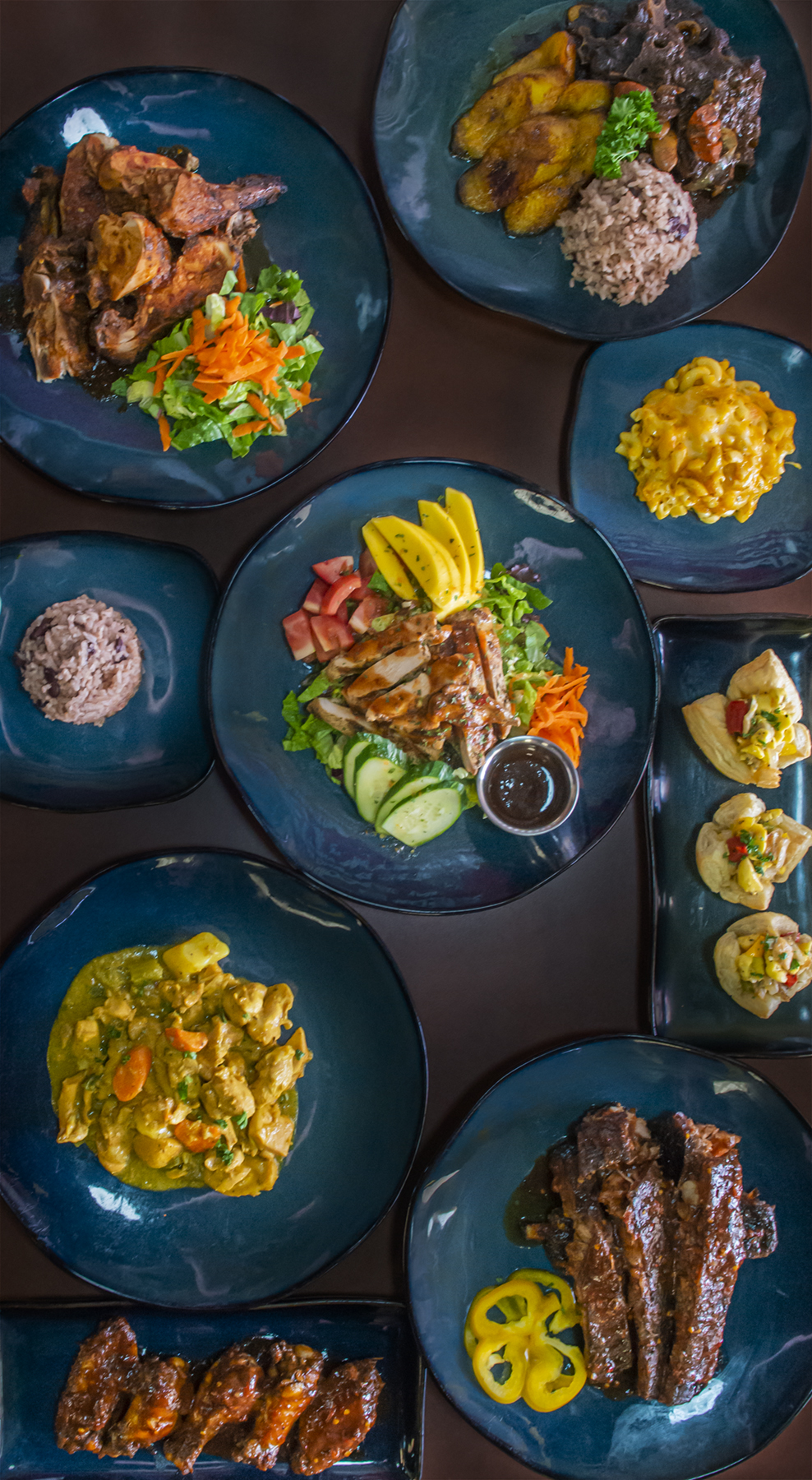
A hundred years is long enough for a cuisine to travel, adapt, lose a few edges, and then recover them in a new form. It is also long enough for family memory to become public history. When people talk about Caribbean food, they often flatten it into a postcard version of the region: jerk, rum, plantains, maybe a fish fry by the water. The real story is larger, older, and much more textured. A proper Caribbean food centennial is not simply a celebration of beloved dishes. It is a way of tracing how islands and coastlines shaped appetite, how migration changed cooking, and how seafood, spice, and deeply rooted technique kept communities fed through hardship and joy.
The Caribbean is not one table. It is many. English, Spanish, French, Dutch, African, Indigenous, Indian, Chinese, Levantine, and creole influences all meet here, often in the same pot. The region includes island nations and mainland territories linked by trade winds, colonial history, and the sea itself. Over the past century, food has remained one of the clearest records of that shared, contested history. You can read it in a bowl of callaloo, a plate of curry crab and dumpling, a Sunday fish broth, or a late-night doubles wrapped in paper and eaten standing up.
What follows is not a museum tour. It is a look at how Caribbean cooking has lived over the last hundred years, in home kitchens, roadside stalls, fishing boats, church halls, city restaurants, and diaspora neighborhoods far from the tropics.
The sea as pantry, workplace, and inheritance
Seafood sits at the heart of Caribbean cooking for obvious reasons, but the obvious answer only gets you halfway there. The sea is not just a source of protein. It has always dictated timing, preservation methods, market rhythms, and flavor habits. In coastal communities, people learned to cook around what the water gave them that week, what the weather allowed, and what would spoil by afternoon if it was not cleaned and seasoned quickly.
Fish was never one thing. Flying fish in Barbados, king fish in Trinidad, snapper in Jamaica, saltfish throughout the region, conch in the Bahamas, lobster in several islands, crab in mangrove zones, shrimp where estuaries allowed it. Preparation depended on price, access, and class. Fresh catch might be escovitched, curried, stewed, grilled, or folded into soups. Salted fish, once a practical necessity of trade and storage, became part of the emotional vocabulary of the cuisine. Ackee and saltfish in Jamaica is a famous example, but nearly every part of the Caribbean has some version of a saltfish dish that is more than thrift cooking. It carries memory.
Over the past century, the way seafood reaches the plate has changed dramatically. Refrigeration and ice distribution altered daily cooking. Urban migration pulled people away from direct access to boats and fishers. Tourism created demand for certain species and polished presentations that often had little to do with local eating habits. More recently, pressure on fisheries and changing ocean conditions have forced difficult choices. In some places, cooks who grew up expecting certain fish year-round now work with seasonal scarcity, rising prices, or imported substitutes.
That tension matters. Authenticity is not simply using the same ingredient forever. In Caribbean kitchens, authenticity often comes from method and sensibility. A cook may use tilapia when snapper is unaffordable, but the green seasoning, the pepper heat, the lime wash, and the instinct to serve it with ground provisions still place the dish firmly within the tradition. The best cooks understand where compromise can happen and where it cannot.
Spice is not just heat
People unfamiliar with the region often reduce Caribbean seasoning to one note: spicy. That misses both the technical and cultural sophistication of the food. Heat matters, certainly. Scotch bonnet and other hot peppers shape many dishes with fruity fire and a distinct aroma. But spice in Caribbean cooking is a layered architecture. It includes allspice, nutmeg, cinnamon, clove, thyme, scallion, garlic, onion, ginger, turmeric, cumin, coriander, bay leaf, culantro, and regional blends that vary from island to island and sometimes from household to household.
The last hundred years have only deepened that complexity. Indian indentured laborers brought curry traditions that rooted themselves firmly in Trinidad and Guyana, then influenced cooking across the region. Chinese migrants contributed techniques, flavor balancing, and new uses of soy and stir-frying. African continuities remained visible in one-pot cooking, greens, okra, and the logic of seasoning deeply rather than superficially. European colonial influence left bread-making, salt cod traditions, pastries, and pickling methods. Indigenous knowledge survives in cassava, pepper sauces, smoking, and local plant use, even when it is underacknowledged.
What makes Caribbean spice remarkable is not only variety but judgment. Seasoning in this cuisine is rarely timid. Fish is often rubbed, marinated, stuffed, or bathed before it hits the fire. Meat is expected to taste of the herbs and spices that touched it, not just of salt. Soups are not background food. They are built with purpose. Rice dishes absorb stock, coconut milk, burnt sugar, or green seasoning until they carry the room with them.
I have often found that the cooks with the steadiest hands use the fewest measuring spoons. They know when thyme should stay in the background and when it should announce itself. They know that a pepper can perfume a pot without being cut open. They know old nutmeg is a waste of time. Those instincts rarely come from recipes alone. They come from repetition, scarcity, observation, and a refusal to serve bland food to people you care about.
A century seen through home kitchens
If you want to understand Caribbean food over the last hundred years, start in the home rather than the restaurant. Most enduring dishes were shaped by household economics. Families stretched fish with dumplings, rice, green bananas, yams, cassava, breadfruit, and dasheen. They cooked according to market days, church calendars, school schedules, and storms. Sunday meals took on ceremony. Holiday cooking became a repository of identity. Everyday dishes absorbed practical innovation without fanfare.
In many households, the menu reflected a hard-earned negotiation between what was available and what felt proper. A pot of pelau, for example, is more than a rice dish. It represents thrift, caramelization, patience, and the conviction that one pot can still produce depth. A fish tea or fish broth does similar work, turning bones, heads, herbs, and ground provisions into something restorative and complete. Even celebratory plates carry this sensibility. They are generous, yes, but also disciplined.
Women held much of this culinary memory, though not exclusively. Grandmothers, mothers, aunties, market vendors, and domestic workers preserved technique under conditions that historians have not always recorded carefully. Men often dominated public food spaces such as fishing, outdoor grilling, street vending, or festival cooking, but the domestic sphere remained the engine room of continuity. Over a century, recipes changed, yet the way knowledge moved stayed familiar: by watching, tasting, correcting, and trying again.
That method of transmission has strengths and weaknesses. It preserves nuance that printed recipes miss, but it can also lead to loss when younger generations move away or lose the time required for slow cooking. Many diaspora families know this problem well. A second-generation child may remember the scent of pepper sauce and coconut milk perfectly yet struggle to reproduce the dish because nobody ever wrote down how long to cook the okra or when to add the fish so it does not break apart. Food memory can be vivid and incomplete at the same time.
The market, the roadside, and the rum shop
For all the power of the home kitchen, Caribbean food has always flourished in public. Markets are where ingredients become visible and status becomes obvious. A market table tells you what is in season, what arrived late, what got expensive, and what people still caribbean food centennial want badly enough to pay for. Over the past century, public food culture in the Caribbean has also been shaped by docks, buses, roadside grills, beach stalls, cricket grounds, fêtes, and rum shops.
Street food deserves special respect in any discussion of a Caribbean food centennial. It carries speed without sacrificing personality. It also shows the region’s talent for portable satisfaction. Patties, bake and shark, doubles, roti, pholourie, accra, fried fish with festivals, and countless local variations prove that serious cooking does not require white tablecloths. Some of the best seasoning in the Caribbean comes wrapped in paper, served from a glass case, or plated on a foam container while music plays too loud nearby.
These public food traditions also reveal class dynamics. Some dishes began as practical meals for workers, fishers, or market people and later became symbols of national pride. Others were elevated through tourism or restaurant culture, then sold back to locals at prices that would have shocked the original cooks. That can create resentment, especially when presentation is valued over substance. A beautifully plated piece of fish means very little if the seasoning never reached the bone.
Still, there is room for evolution. Fine dining chefs across the Caribbean and in diaspora cities have done meaningful work by treating local ingredients with seriousness rather than exoticism. The best of them are not inventing dignity from scratch. They are recognizing what was already there.
Migration changed the menu, but not the appetite
No honest history of Caribbean food over the last century can ignore migration. Caribbean people have moved to London, Toronto, New York, Miami, Panama, Amsterdam, and many other cities in large numbers. They carried recipes with them, then adapted under pressure. Climate changed the produce. Apartment life changed cooking methods. Work schedules changed mealtimes. Ingredient substitutions became routine.
That is where ingenuity shines. Callaloo might be made with different greens. Saltfish remains reliable because it travels well. Scotch bonnet may be replaced, then restored when the right grocer opens nearby. Fish markets in immigrant neighborhoods become cultural anchors. Restaurants function as social clubs, job networks, and memory banks as much as businesses.
Diaspora cooking often becomes more intentional than homeland cooking because it must fight to survive. People save freezer space for cassava pone, sorrel concentrate, tamarind, or carefully wrapped parcels of seasoned fish. They argue about whether the local bakery’s hard dough bread is close enough. They compare curry powders, import sauces, and ship barrels at Christmas. In that process, some dishes become standardized and others grow more hybrid.
There is no shame in that hybridity. The Caribbean has always been hybrid. What matters is whether the cooking still carries the logic of the cuisine. Does the food understand balance? Does it season boldly? Does it respect texture? Does it know when coconut milk should soften a dish and when acid should cut through richness? Those are deeper markers of continuity than rigid ingredient policing.
Three dishes that tell the century’s story
Certain dishes can serve as shorthand for a hundred years of adaptation, pride, and practical intelligence. They are not the only important foods in the region, but they reveal how Caribbean cooking thinks.
Ackee and saltfish speaks to trade history, preservation, and national identity. It also shows how a dish can become emblematic while retaining its household soul. Good versions are not greasy, and they do not bully the ackee into mush. The saltfish should be properly prepared, the aromatics bright, and the overall effect savory rather than heavy.
Curry crab and dumpling captures the Indo-Caribbean contribution with total confidence. It is messy, fragrant, and deeply social food, the kind people eat with concentration and pleasure. The crab brings sweetness and marine depth, while the curry carries spice, color, and memory. Dumplings make the sauce non-negotiable. Nothing should be left behind.
Fish broth or fish tea represents another side of the tradition, one that values restoration over spectacle. This is food for after rain, after illness, after a long week, after a funeral, after hard work. It uses the sea economically and expertly. The broth should taste alive, with herbs, peppers, starches, and fish all contributing rather than competing.
Those dishes also show a key truth about Caribbean food. Comfort and seriousness are not opposites here. A humble dish can display immense technical skill.
What was gained, what was lost
Across the last century, Caribbean food benefited from wider ingredient access, better storage, larger audiences, and greater global recognition. Cooks can now preserve fresh herbs, transport seafood faster, and share traditions across borders with more ease than previous generations could imagine. Culinary schools, food festivals, and media have also made it easier for younger chefs to treat Caribbean cuisine as a professional discipline rather than something to escape.
But losses are real. Some local varieties of produce have become harder to find. Certain fish are scarcer or too costly for everyday use. Imported processed foods have weakened cooking habits in places where time and money are both tight. Tourism has encouraged a simplified version of Caribbean food that can be sold quickly to visitors but often strips out bitterness, funk, texture, and heat, all the qualities that make the cuisine feel alive.
There is also the issue of labor. Slow Caribbean cooking asks a lot from the cook: cleaning fish, grating coconut, kneading dough, simmering stocks, washing greens properly, balancing pepper carefully, and waiting for flavors to settle. When economic pressure leaves little time for any of that, convenience wins. Nobody should romanticize exhaustion. At the same time, once a technique disappears from daily life, reviving it becomes much harder.
The future depends on which traditions people decide are worth the trouble.
The new generation at the stove
One of the most encouraging developments in recent years is the confidence of younger Caribbean cooks. They are not interested in apologizing for bold seasoning or explaining away dishes with strong personalities. They are documenting recipes, reviving overlooked ingredients, and asking sharper questions about sourcing, labor, and regional identity. Many are also rejecting the old habit of treating European culinary standards as the final measure of refinement.
That shift is healthy. Caribbean cuisine does not need translation into legitimacy. It needs careful stewardship. Younger chefs, writers, farmers, and fishers are increasingly aware that food heritage is not saved through nostalgia alone. It requires infrastructure, education, and fair economics. If local fishers cannot make a living, seafood traditions weaken. If small farmers disappear, spice and produce diversity narrows. If culinary tourism rewards spectacle instead of substance, the cuisine drifts toward performance.
A serious Caribbean food centennial should therefore celebrate taste while asking practical questions. Who grows the thyme and hot peppers? Who catches the snapper? Who knows how to prepare breadfruit three different ways without wasting any of it? Who still makes pepper sauce that tastes of fresh fruit as much as heat? Heritage survives because somebody does the work.
Why the soul of the cuisine still holds
For all the change across a hundred years, the soul of Caribbean food remains recognizable. It is generous without being careless. It values intensity. It respects the sea. It understands starch as comfort and structure, not filler. It makes room for sweetness, smoke, acid, fire, and herbs in the same meal. It feeds crowds well. It turns scarcity into depth through technique rather than sentiment.
Most of all, it knows that food is social truth. You learn a great deal about a household, a village, or a nation by how it seasons fish, how it stretches a pot, what it saves for Sunday, and what it serves when someone is grieving or celebrating. Caribbean cooking has endured because it does more than please the palate. It organizes memory.
That is why a century of seafood, spice, and soul still feels immediate. These foods are not relics. They are active, argued over, adapted daily, and defended with feeling. A bowl of soup, a plate of fried fish, a spoonful of callaloo, a carefully made curry, these are not small things in the Caribbean imagination. They carry history in a form people can taste.
If the next hundred years are to honor the last, the task is straightforward even if it is not easy. Keep the methods alive. Buy from the people who know the land and sea. Teach the dishes in full, not just their names. Let the cuisine evolve, but do not let it forget how to season, how to stretch, how to gather reggaepotjamaicangrill.com caribbean food centennial people around a table, and how to make the sea speak through supper.
Reggae Pot Jamaican Grill
Address: 7562 S University Blvd Unit C, Centennial, CO 80122
Phone: (303) 997-5623
FAQ About caribbean food centennial
What Jamaican dishes can I try in Centennial?
Reggae Pot Jamaican Grill serves Jamaican specialties such as jerk chicken, stewed oxtail, curry goat, and ackee and saltfish. Check the current menu for availability.
What is ackee and saltfish?
It is Jamaica’s national dish. The restaurant prepares ackee with salted cod, onions, thyme, tomatoes, garlic, black pepper, and pimento.
Can I order Jamaican food for pickup in Centennial?
Yes. Choose the Centennial location at 7562 S University Blvd Unit C when placing a takeout order.